
This blog has been written by Prabhroop Kaur, student at the Glasgow University currently on a placement with the Solway Firth Partnership.
On picturing the perfect getaway to the Solway coast, what usually comes to mind are the dynamic seaside cliffs or sandy beaches. But have you ever stepped out and explored your coast at low tide?
You might come across one of the Firth’s lesser understood habitats: the mudflats. Put simply, mudflats are the muddy landscapes left behind when the tide recedes.
The Solway is known to hold the third-largest area of continuous mudflats and sandflats in the UK. They might appear as lifeless stretches of dull old mud waiting for the tide to return, but what lies beneath will truly surprise you. They are landscapes full of life, with channels and sandbanks that continuously reshape themselves and host a hidden world of marine life.
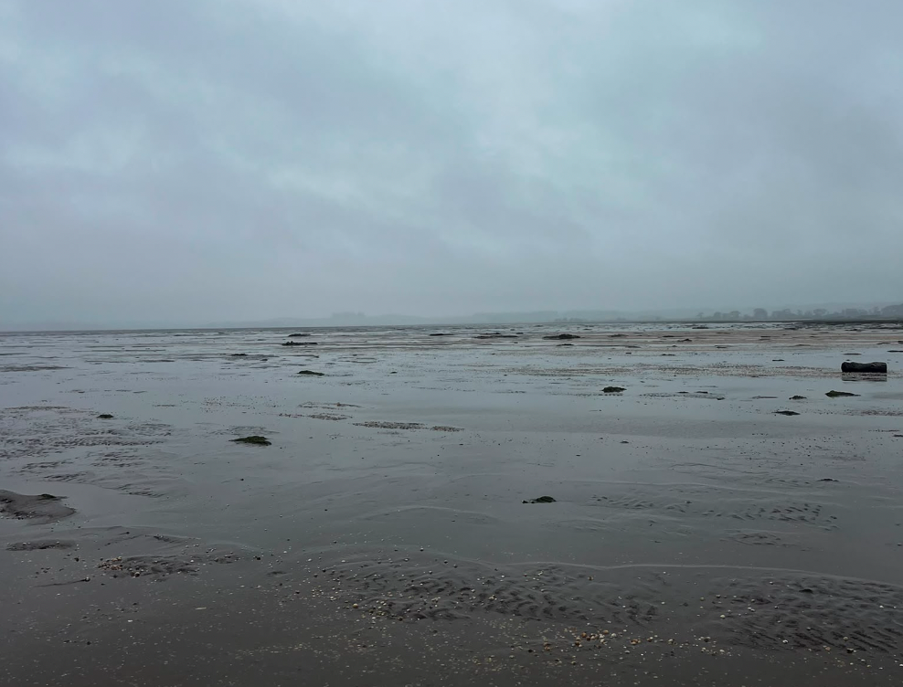
The magic that these landscapes of life behold
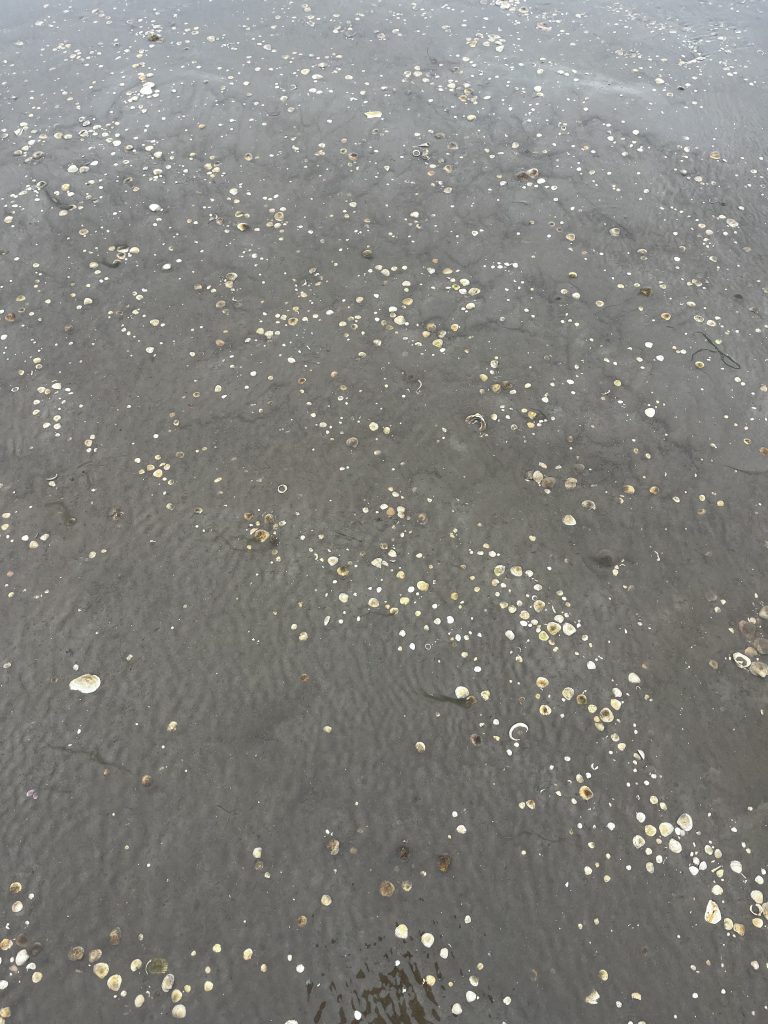
Mudflats are home to invertebrates, molluscs and crustaceans that together build the foundation of coastal food webs. Those tiny, coiled mud piles you might notice on the surface are the cast of lugworms and ragworms. These creatures burrow deep into the sediment and form a critical food source for wading birds and fish, particularly during winter when other food is scarce.
Mudflats also provide nursing grounds for fish like smelt and bass alongside skates and rays. If you’re lucky enough, you can even spot harbour porpoises moving through the shallow waters over the mud. The habitat’s significance also spans internationally, with over 140,000 birds, overwintering wildfowl and waders taking shelter in the mudflats each winter. Beyond supporting wildlife, mudflats have a major role to play in protecting us from flooding in the region.
Why are the mudflats under constant pressure?
Despite their importance, this habitat is under a series of risks. Rising sea levels paired with unpredictable weather events cause sediments to get washed away, leading to shrinking mudflats over time.
Another risk is the ‘coastal squeeze’ caused by a combination of sea level rise alongside growing coastal development , causing these delicate landscapes to be squeezed into limited spaces.
In the UK, mudflats spread across 270,000 hectares, the size of 385,000 football pitches put together. However, assessments show that their condition remains poor, often affected by pollution, invasive species and climate change.
Why does it matter to us?
The mudflats beneath your feet at low tide aren’t just empty space, they are thriving habitats filled with life and purpose, a critical food source for thousands of species and a natural buffer silently protecting our coastline. So, the next time you’re walking across, take a moment to look closer at the mud and realise that there is so much more going on beneath the surface than what meets the eye.
Simple actions can protect our precious mudflats, like responsible tourism and supporting local conservation projects. Visit the Solway Firth Partnership website to find out more about how we’re working to protect this incredible coastline, and how you can get involved.
