
Coastal Burns Project
So far for the Coastal Burns project, electrofishing and macroinvertebrate surveys have been undertaken on Monreith, Innermessan and Sole Burn.
The Monreith Burn is part of the Luce catchment and discharges into the Solway at Monreith beach. GFT have had initial discussions with interested Monreith Burn landowners. At the top of the catchment, Barmeal Farm which is on Black Burn (tributary of Monreith Burn) is owned by some very interested and keen landowners, who are hoping to develop a community restoration project surrounding Monreith. GFT have also had initial discussions with several farms, limited discussions requesting access but farmers are interested and were keen for us to survey.
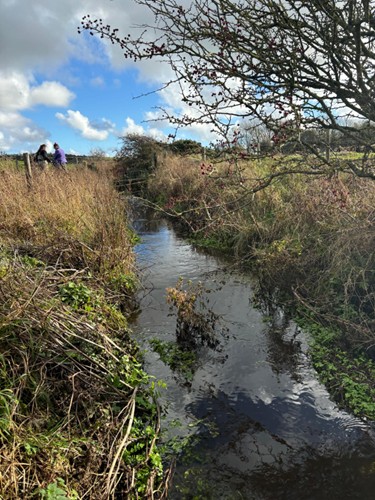
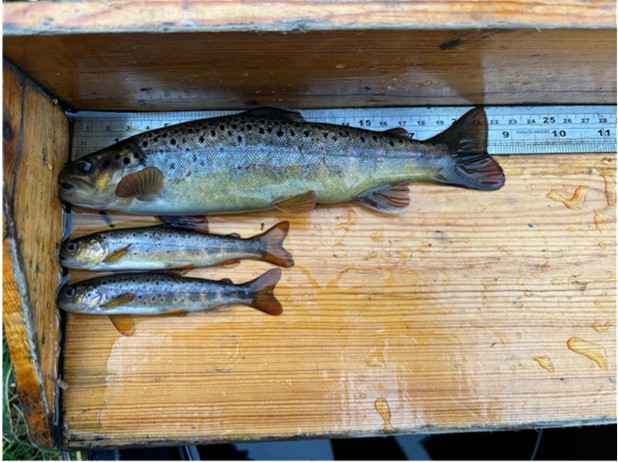
Black Burn (tributary of Monreith Burn) Brown trout from Monreith Burn
Innermessan Burn discharges into the East of Loch Ryan, below Cairnryan. GFT have previously worked with the local angling club and have a working relationship with the landowner Lord Stair. Lord Stair owns the entire Innermessan catchment.
There is a population of brown trout and juvenile eels were discovered at each EF site on the Innermessan.
Habitat Surveys are planned for early spring for both Monreith and Innermessan. GFT have previously conducted a habitat study of the Innermessan in collaboration with the Wild Trout Trust.
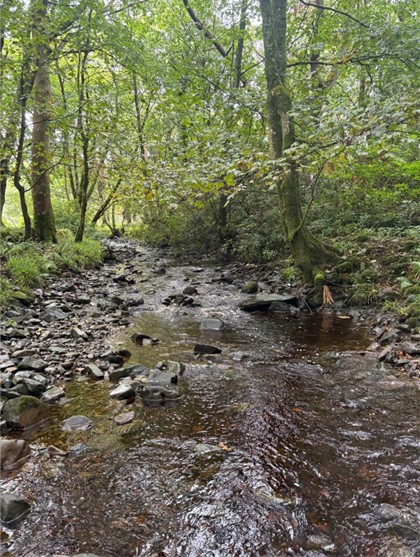
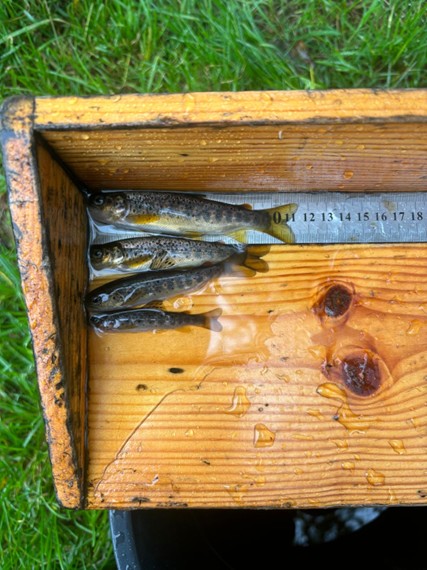
Innermessan Burn Innermessan Trout
The Sole Burn discharges into the west of Loch Ryan. There were limited landowner discussions at the Sole Burn, but all were happy to let us access burn from their land. Limited salmonid population but number of juvenile eels including elvers were found during the surveys. The invertebrate kick samples are still being analysed.
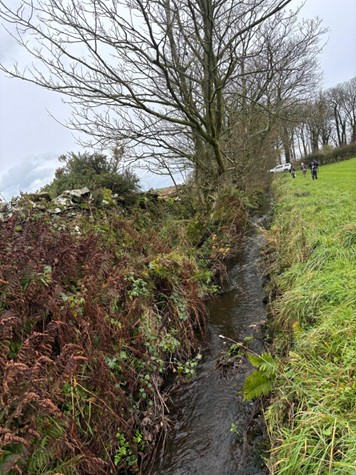
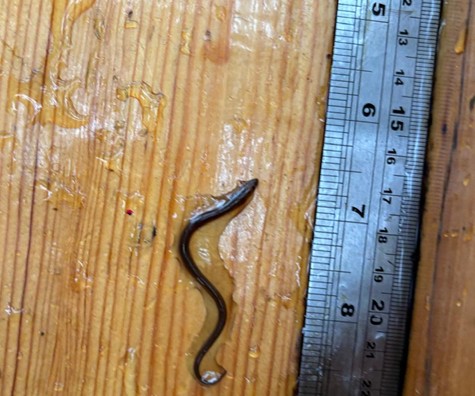
Sole Burn Sole Burn European eel elver
Coastal INNS Project
So far, any known populations of Japanese knotweed, skunk cabbage, giant hogweed and Himalayan balsam around the Machars and Rhins have been surveyed. Sections of the Colvend coast and the Kirkcudbrightshire coast have also been surveyed with no populations found.
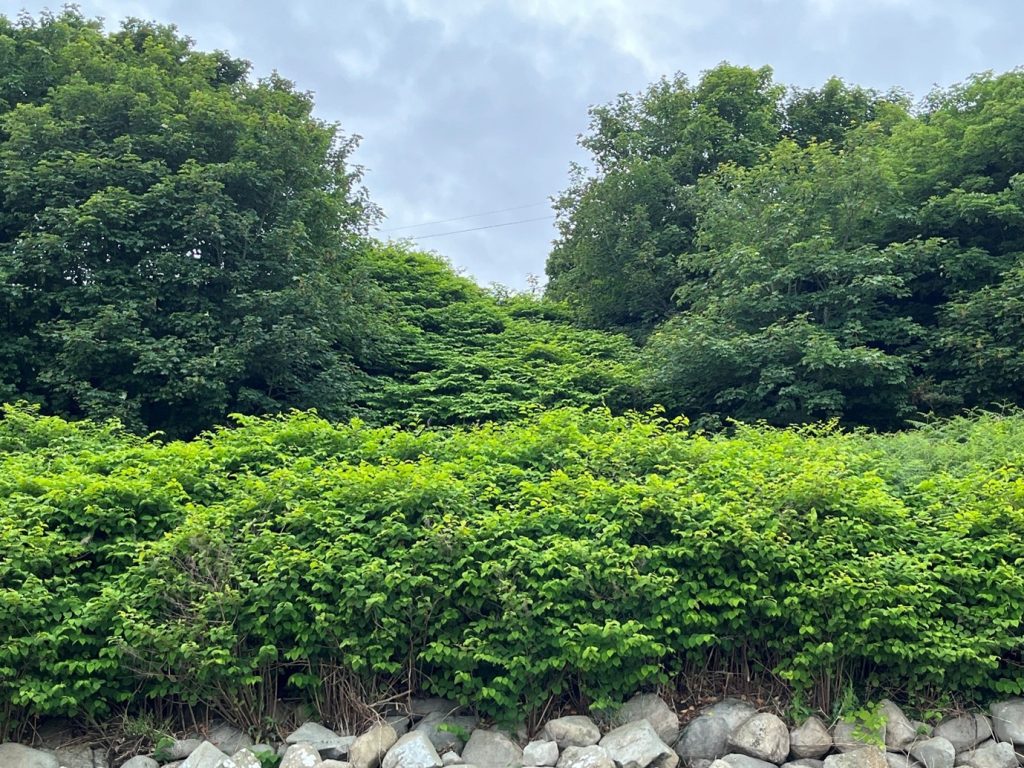
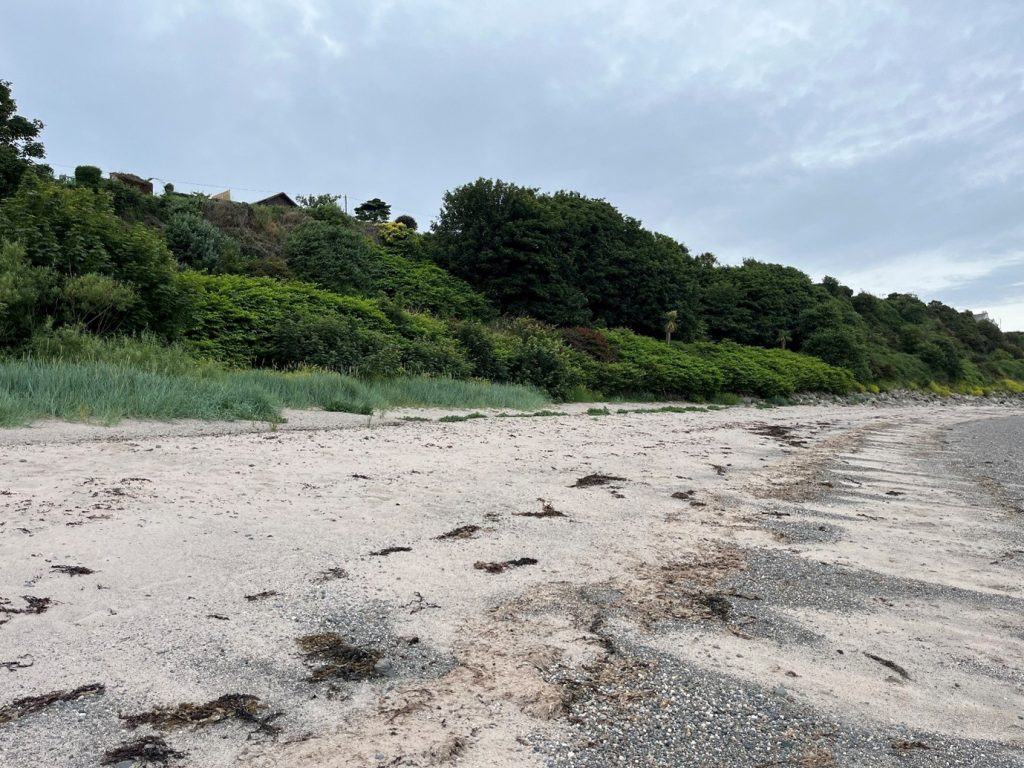
Drummore beach path – Japanese knotweed colony (June 2025) Sandhead Japanese knotweed
Several new populations have been discovered and surveyed along the coast. These populations include Himalayan balsam and Japanese knotweed. Surveys to the east of region have been planned for 2026.
GFT have been working on the production of a community outreach campaign. This campaign hopes to use social media and reach out to landowners and community councils, providing the public with informative leaflets detailing the invasive plants we are looking for, at different life stages. The leaflets will also give instructions of how to report the INNS and detail what information we need if they do find any. This campaign will also include targeting game keepers and land managers in the densely planted/private coastal areas.
Another section of this campaign is planning community council outreach- attendance at community council meetings to discuss INNS and educate on ID and knowledge sharing.
Further surveys are planned use innovative drone technology, more information on that soon.
Coastal Fish Project
Galloway Fisheries Trust are currently planning and organising the Sparling Site Condition Monitoring for early spring 2026. Appropriate licenses have been acquired, the necessary equipment has been sorted and replaced if necessary.
Coastal surveys at Garlieston Beach: there have been 3 separate survey days, which have included testing the seine netting techniques and developing methodology for quantifying seine netting/surveys. So far we have found Sandeel populations, thick lipped mullet of different sizes and juvenile Sea bass. Other species include: Flounder, Sand smelt, 15 spine sticklebacks and several species of gobies.
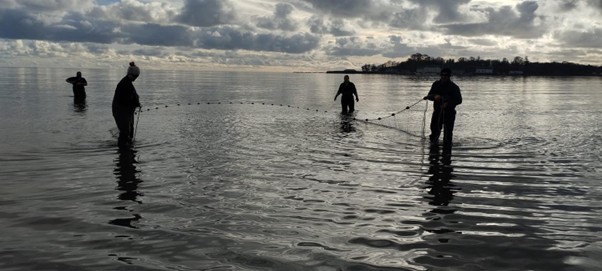
Seine netting on Garlieston Beach November 2025
